The operator asked us not to name them, so we haven't. The vessel, its home port and the crew are left out of this case study. Everything else is as it happened: the order, the blinds and the figures.
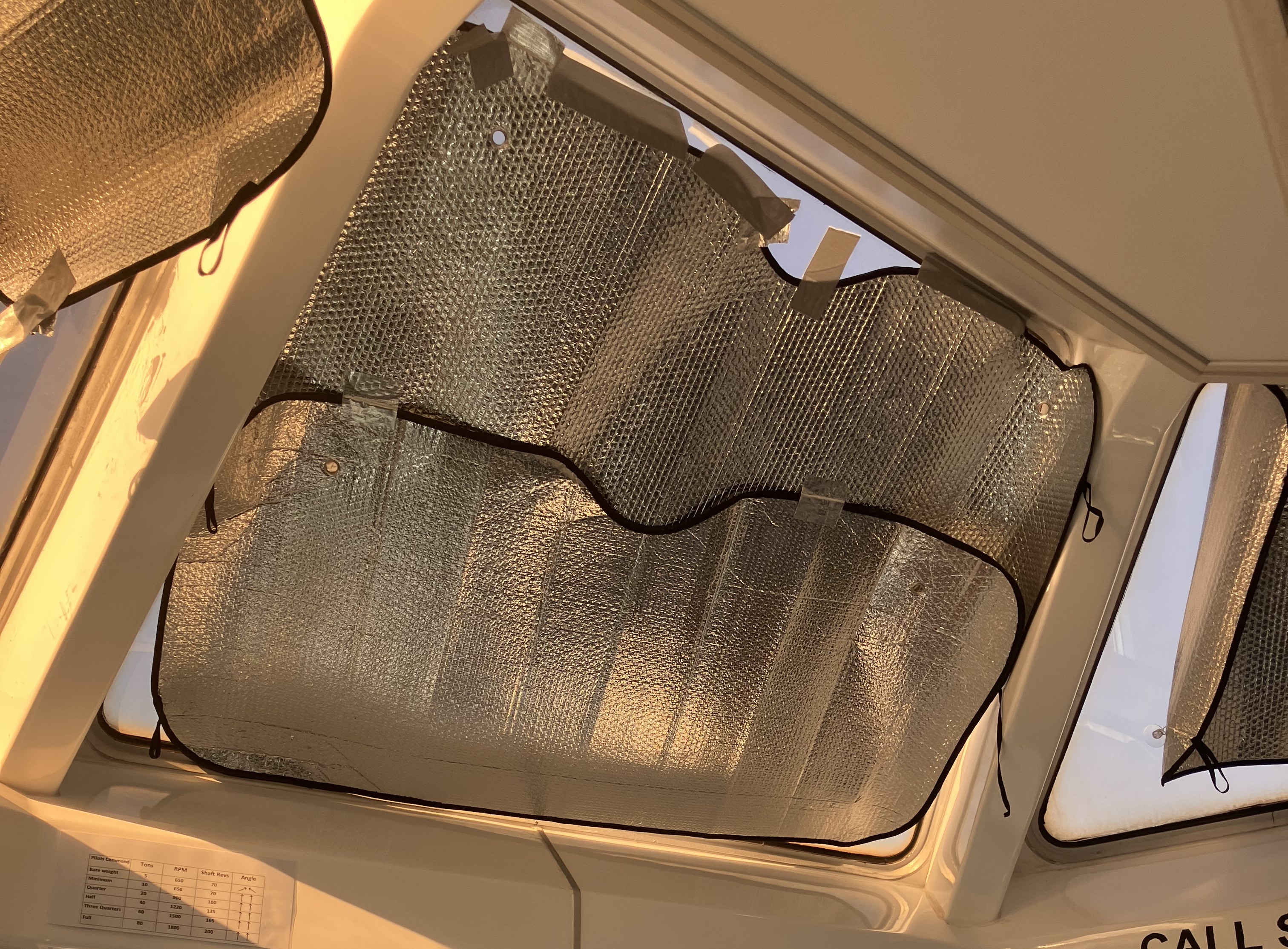
Boat window blinds for a tugboat wheelhouse, fitted by the crew from the box.
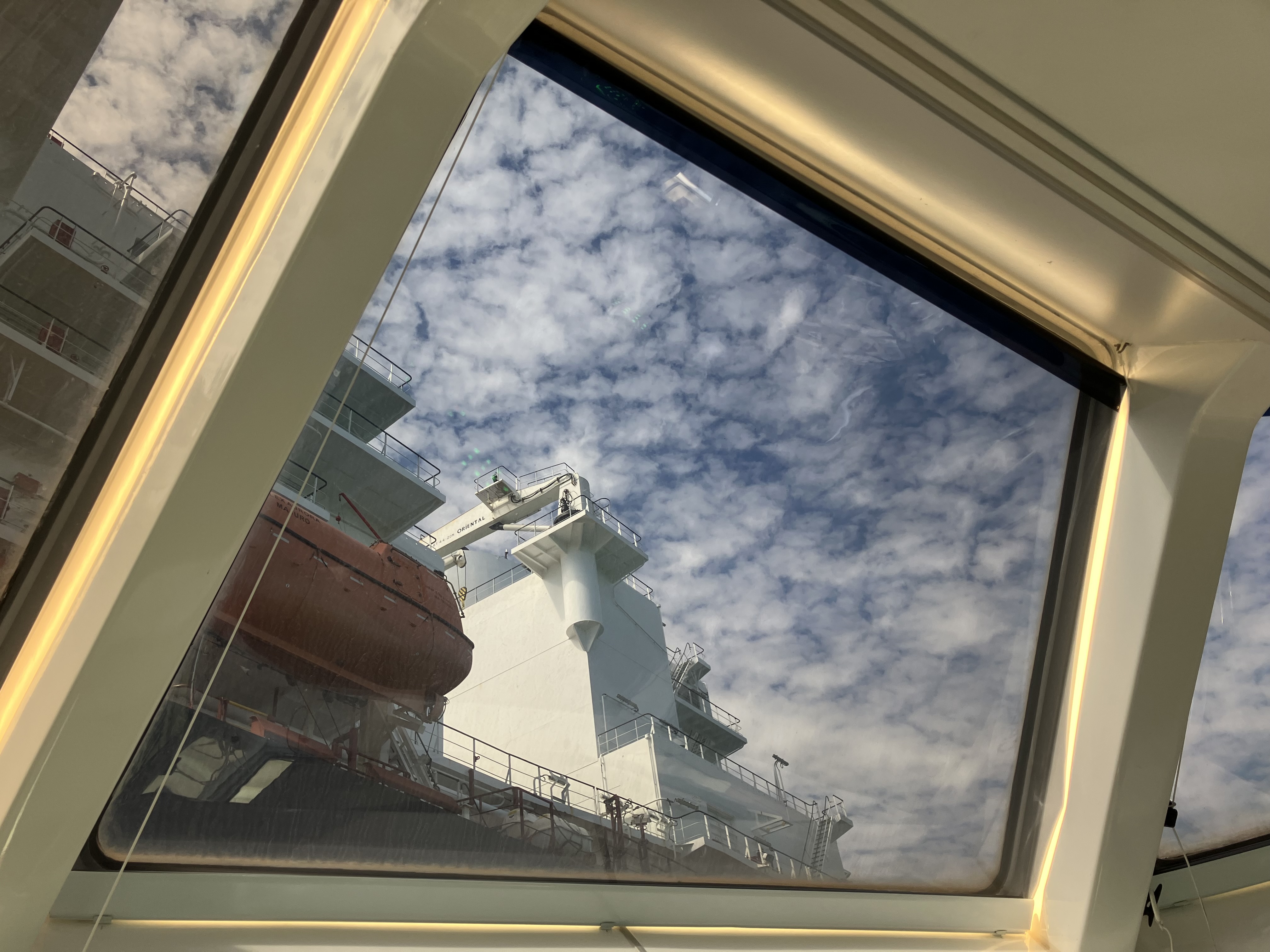
A tugboat wheelhouse on the Western Australian coast works in full sun and full glare off the water. The operator sent us the window dimensions. We made 5 Mini Cassette blinds with blue reflective solar film in Whittlesea, dispatched them 8 days after the purchase order, and the crew fitted them with the hardware in the box. The view stayed.
Why a bridge is the hardest window on the water
A tugboat wheelhouse is glass on every side. It has to be, because the crew needs to see the tow, the berth and the water at the same time. That same glass lets the sun in from every side too.
If you have spent a day on a boat, you already know the problem. Glare off the water is worse than glare off a road, because the water throws the sun back up at you. It tires the eyes, it hides what is on the surface, and it makes instruments harder to read.
Then there is the heat. A cabin or wheelhouse is a glasshouse on the water, and by mid afternoon it can be hotter inside than out. Boats, tugs, yachts and large navy ships all deal with this, and most of them deal with it badly.
Here is why: On a house, you fix sun with a blind and shut it. On a boat, you cannot. Block out blinds, curtains and stick on window tint all cut what the crew can see, and in a storm or at night that is a safety problem, not a comfort one.
Marine windows are also rarely square. They are raked, angled or triangular to follow the line of the hull, so a standard blind off the shelf will not fit them anyway. Most operators end up putting up with the heat and glare to keep the view. Some try a makeshift fix that cuts a fraction of the heat and still gets in the way.
What a vessel needs is a blind that does two things at once: blocks the sun's heat and glare, and lets the crew keep looking straight through it. That is what a reflective blind does.
The solar film on the blind sends the sun's energy back out through the glass instead of letting it into the cabin, and because the film is see through from the inside, the water, the tow and the berth stay in view. When the sun moves or the weather turns, the blind rolls up out of the way.
That is where this operator started. The angled upper windows of the wheelhouse were in constant sun, and the crew was using car windshield sun protectors to get through the day. Another supplier turned the job away. Then they got in touch with Reflective Blinds Australia.
What the operator sent us, and what came back
Most marine blinds arrive as a supplier's job: a site visit, a template cut on the day, a fitter booked around the vessel's schedule. That is fine for a house. For a working vessel that is in port for a few days at a time, it is the reason the blinds never get done.
This operator found that RBA only needed the window dimensions. We did the rest.
That is possible because the blinds are made in our factory in Whittlesea, Victoria, not ordered in from a catalogue. We have been making reflective blinds since 1979 and we make every one to the measurements we are given, so a triangular window is not a problem to be solved, it is just a shape on a drawing. A wheelhouse window is a production job for us, not a special request sent somewhere else.
The operator sent a digital drawing of each opening. The windows were not standard: some triangular, some angled. We confirmed the fit, and we made 5 Mini Cassette blinds with blue reflective solar film, one for each window.
The Mini Cassette is the product we recommend for a wheelhouse because the housing is slim and the blind rolls up inside it when it is not needed, so nothing hangs in the crew's line of sight. The blue film is the one we reach for when glare is the main problem.
It rejects 90.8% of glare and 43% of the sun's total energy, and it cuts more than 99% of UV, which is what fades charts, seats and consoles. It lets 7.4% of visible light through, and that is the number that matters on a bridge: enough to see the water and the tow clearly, the way you see through a good pair of sunglasses, without the wash of light that tires the eyes. The film is 5 mil thick with a scratch resistant coating, so it stands up to a working wheelhouse.
The order ran the way every RBA order runs.
- The operator sent the window dimensions.
- We confirmed the fit and sent a quote.
- The operator sent a purchase order.
- We manufactured in Whittlesea and dispatched 8 days after the purchase order.
- We delivered with every fixing in the box.
Then the vessel's own crew fitted them. No RBA fitter on board, no second contractor to book, no return visit. For a vessel that works to a schedule, that is the difference between blinds that go in this week and blinds that wait for the next port.
Film specifications
Film: Blue
Visible light transmittance (VLT): 7.4%*
Glare rejection: 90.8%
Total solar energy rejection (TSER): 43%*
UV rejection: over 99%
Thickness: 5 mil (about 0.13 mm)
Scratch resistant coating: yes
Figures supplied by Reflective Blinds Australia for the blue film used on this project.
*Measured to ANSI/NFRC 200-2023 and NFRC 300-2023. Actual values may change marginally due to manufacturing process.
What changed on the bridge
The blinds went in and fit the window frames, triangular and angled included. The car windshield protectors came out.
And the view stayed. That is the part people do not expect on a bridge, and it is the reason a reflective blind works on a boat where a normal blind does not. The film sends most of the sun's energy back out through the glass, so the wheelhouse is cooler and 90.8% of the glare is off the instruments, but the crew is still looking straight through at the water. When they want the full window back, the blind rolls up into its cassette. Block the sun, not the view.
This is the same product that goes into homes and offices across Australia. It is made to the same commercial specification whether it is heading to a lounge room or a wheelhouse. What changes is the shape of the window, and we make to that.